What A difficult Freelance Contract Taught Me
There’s a growing trend in the freelance market that isn’t talked about enough.: roles labelled as freelance that function like full time jobs – without the pay, protection or respect.
After recently working under a freelance contract that blurred every boundary it claimed to respect, it became clear how easily this structure can be used to shift all risk onto one person- you. Lets talk about it.
Enjoying The work Doesn’t Mean The Arrangement Is Fair
One of the more confusing parts of an unhealthy working arrangement can be that you may genuinely enjoy the work itself. That can make it harder to recognize when the structure around the work has become unsustainable.
For me, I wanted the professional experience to truly solidify my career pivot- when I started noticing the flags I started to take precautions to protect myself in case I ever needed it but move forward to continue to provide for my life and my family.
I suspect with the really terrible unemployment statistics in this country that many others accept similar contracts due to equally stressful circumstances ie. putting food on the table by accepting a poor/unfair working arrangement.
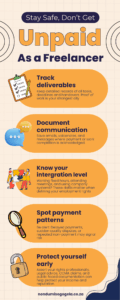
The Red Flags
#1 Freelance with full time expectations
Fixed hours, Daily/ weekly Check ins, Managerial oversight
#2 When timelines are dictated, Not Discussed
Expanding responsibilities, project times defined by employer & not actual time spent per project
#3 Payment structures that favour the employers
Long payment terms or payment tied to approval
#4 Emotional Leverage
Look for phrases like “We’re a small team, We’re building something exciting” – this is used to justify underpaying
#6 Toxic Culture Doesn’t Stop at the Front Office
Pay attention to how they treat their clients. A business that avoids calls, communicates poorly, shifts blame, or looks for ways to avoid payment is showing you how it handles working relationship in general. If you witness these events there’s a good chance the same pattern will eventually show up in how they work with you.
When contracts like this even exist- they usually target people who are new, financially pressured or trying to prove themselves. They normalize unfair expectations and lower standards across the industry.
What Fair Freelance Work Should Look Like
This is the model of a freelance contract that one should look for so that you are’nt freelance in name but employee in practice:
A clear scope, defined deliverables, payment milestones, respect of autonomy and basically a clear separation from a contracted freelancer and an employee. Once a contract asks you to work around their schedule, dictates your hours ie. attend regular meetings, complete copious amounts of paperwork for thle clients business- be suspicious.
Tools to protect yourself
Get a contract in writing, track scope early, know when to walk away.
The last part of this I’m afraid is a part that I probably struggled with in my case- knowing when to walk away. I tend to rationalize such choices ie. I don’t have another source of income.
Should anything go south, don’t hope and wait – the CCMA is there particularly for those whos freelance roles functioned more as employees, you then can be treated as an employee and CCMA can help. Just have a look at section 200 A-J of the labor relations act. If any and I mean any component of that section applies to you, then you are an employee.
Lastly, when going into freelancing be practical and firm- if it looks like a job it should pay like one, if scope isn’t defined then don’t start, if payment terms are vague, that’s a warning, if you feel uneasy, don’t rationalize it.
In closing
Freelancing has been a lifesaver many as it offers flexibility and opportunity- but only when both sides operate fairly. Knowing the signs early can make the difference between a healthy relationship and a costly lesson.
Follow my journey in tech and lets connect.